OpenGEO · Observation #001
How AI Search Recommends: Query Rewrites and Sources in 5 Chinese AIs
Contents
This is the English translation of the Chinese original, first published on 2026-11-05. Search queries and on-figure labels are kept in Chinese, with English glosses in brackets or captions.
Bottom line: AI search does not search with your exact words. It first works out where you are, rewrites the question into several search queries, and then picks part of what it finds to hand to the model. Each platform does these three steps differently, so the same question gets different recommendations.
I asked 5 Chinese AI assistants the same question, “What medical aesthetics clinics are there in Suzhou?” (苏州当地有哪些医美?), and captured the network requests behind each answer. The differences visible in this one question are concentrated in the three steps below.
Key points
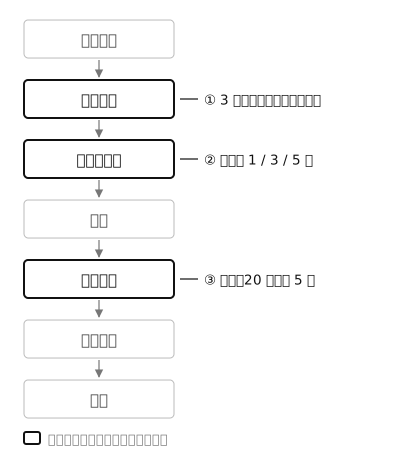
- Location detection: 3 platforms handled location-related information beyond the question itself, such as IP geolocation, browser location permissions, and a region-search tool.
- Query rewriting: from the same sentence, one platform produced 1 search query, another 3, another 5, and they went in different directions.
- Conversation history gets into the queries: one platform carried a company name from the previous turn into this turn’s search queries.
- Source filtering: one platform retrieved 20 items and sent only 5 of them to the model.
- What it means for GEO: what you need to study is the queries after the AI rewrites them, not just the keywords users type; when testing recommendation rates, the conversation context has to be controlled as a variable.
Note: clinic and pharmaceutical company names are replaced with XX. [Observed] means seen directly in the capture, [Inferred] means inferred from what was observed, and [Unknown] means not captured or not possible to determine.
Does AI search get your location?#
Yes. At least 3 platforms do.
| Platform | What was observed | Evidence |
|---|---|---|
| Doubao | The request carried 3 browser location-permission states, but no coordinates | [Observed] |
| Qwen | Before the question, it looked up the IP’s location; the analytics field user_city was “苏州市” (Suzhou), and the intent was labeled “本地生活-地点周边信息查询” (local services: nearby place information) | [Observed] |
| Tencent Yuanbao | Called a region_search tool | [Observed] |
| Kimi | Not observed | [Unknown] |
| DeepSeek | Not observed | [Unknown] |
But because the question already said “Suzhou”, I can’t tell from this test whether location affected the recommendations[Unknown]. For local service businesses, the point worth noting is this: even when the user doesn’t name a city, the AI may work it out on its own.
What does AI search actually search for?#
Not your exact words. The AI first rewrites the question into search queries, a step known as query rewriting.
| Platform | Queries | Actual search queries |
|---|---|---|
| Qwen | 1 | 苏州当地医美机构及医疗美容医院 [local medical aesthetics providers and cosmetic hospitals in Suzhou] |
| Kimi | 3 | 苏州 医美机构 知名 排行榜 2025 [Suzhou medical aesthetics providers, well-known, ranking 2025]; 苏州 整形医院 公立 医疗美容科 [Suzhou plastic surgery hospital, public, medical aesthetics department]; 苏州 医美 产业 企业 [Suzhou medical aesthetics industry companies] |
| Doubao | 5 | 苏州正规医美机构 公立三甲皮肤科 连锁医美 敏感肌 [licensed providers in Suzhou, top-tier public hospital dermatology, chain clinics, sensitive skin]; 苏州姑苏XX医美诊所介绍 [about the XX medical aesthetics clinic in Gusu, Suzhou]; 苏州吴中 高新区 医美机构推荐 敏感肌 [Wuzhong and High-Tech Zone, Suzhou: recommended providers, sensitive skin]; 苏州敏感肌医美面诊避坑 [Suzhou, sensitive skin: pitfalls to avoid at consultations]; 苏州光子嫩肤红血丝机构测评 [Suzhou IPL photorejuvenation for facial redness: provider reviews] |
Tencent Yuanbao’s rewritten queries were not captured this time, and DeepSeek is not counted for this question.
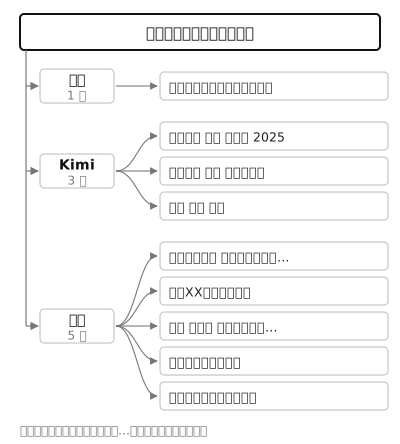
The three approaches differ a lot[Observed]:
- Qwen basically searches for the original meaning.
- Kimi adds rankings, public hospitals, and an industry angle.
- Doubao breaks it down the most, searching separately for sensitive skin, consultation pitfalls, and IPL photorejuvenation.
The user asks about “medical aesthetics in Suzhou”, but what the AI actually searches for may be “pitfalls to avoid at sensitive-skin consultations”. Content built only around the original keyword won’t be found by these searches.
Does what you talked about earlier affect AI search?#
This time I saw one example.
Doubao’s second query was “苏州姑苏XX医美诊所介绍” [about the XX medical aesthetics clinic in Gusu, Suzhou]. I never mentioned this clinic in this question, but it shares its name with the pharmaceutical company in my previous question, “XX药业是什么” [What is XX Pharmaceutical?][Observed].
| Turn | Content |
|---|---|
| Question 2 | “XX药业是什么” [What is XX Pharmaceutical?] |
| Question 3 | “苏州当地有哪些医美” [What medical aesthetics clinics are there in Suzhou?] |
| Query generated by Doubao | “苏州姑苏XX医美诊所介绍” [about the XX medical aesthetics clinic in Gusu, Suzhou] |
In other words, a company name from the previous turn was carried into this turn’s search. When rewriting queries, the AI very likely draws on the conversation history[Inferred]. The other platforms didn’t do this here, but that is not evidence that they don’t use conversation history.
This matters a lot for GEO testing: asking directly in a new conversation and asking after a few turns may lead the AI to search for different things.
Does AI search use everything it finds?#
No. Being retrieved, being read, and being cited are three different things.
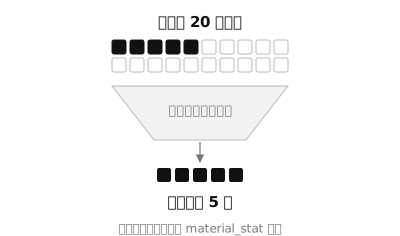
Qwen: 20 items retrieved, 5 sent to the model. The material_stat field shows 20 items retrieved, of which only 5 were finally sent to the model[Observed]. How those 5 were chosen can’t be reconstructed[Unknown].
Doubao: Douyin and business-registration information make up a sizable share. The page said it referenced 29 sources, and I captured 17 of them with links[Observed]:
| Source type | Count |
|---|---|
| Related to the same-named clinic (Qichacha, a district government filing notice, a yellow-pages listing, Aiqicha, a job posting, a review page) | 6 |
| Douyin videos | 4 |
| Hospital websites | 2 |
| China.com (中华网) | 2 |
| Other (Hangzhou Net 杭州网, Chao News 潮新闻, Xiaohe 小荷, 1 each) | 3 |
Earlier, when I asked about skincare products, 10 of the 29 sources also came from Douyin. Entity information such as business registrations and official filings also made it into the citations. But these are only the sources that were cited, not all the candidates, and how much weight each one carries can’t be seen[Unknown].
Kimi: one round of retrieval, citations pinned to paragraphs. Kimi searched once and cited 12 sources. Its citations can be linked to specific paragraphs in the original web pages, not just to a URL[Observed].
DeepSeek: searches again based on the first round of results. This data comes from the next question: with deep thinking (深度思考) turned on, I asked about the price of IPL photorejuvenation in Suzhou. It first searched 5 queries, got 30 results, and opened 7 web pages; it then searched 4 more specific queries, as specific as “苏州市立医院 东区 光子嫩肤 M22 价格 单次” [Suzhou Municipal Hospital, East Campus, IPL photorejuvenation, M22, price per session], opened 3 more pages, and only then answered[Observed]. This is a different question and can’t be compared directly with the other platforms, but it shows that some AIs run additional rounds of retrieval[Inferred].
What does this mean for GEO?#
- Study the queries after the AI rewrites them, not just the user’s original words. AI breaks a broad question down into specific needs, such as a group of people (sensitive skin), a treatment (IPL photorejuvenation), or a concern (pitfalls to avoid). Content that covers these narrower questions is more likely to be found.
- Control the conversation context when measuring AI recommendation rates. Results in a new conversation and in an ongoing one may differ. Recommendation-rate figures that don’t state their test conditions are hard to reproduce.
- Look at retrieved, read, cited, and recommended separately. Being found doesn’t mean the model will read your content; being read doesn’t mean being cited; and being cited doesn’t mean your brand gets recommended. If you only look at the final recommendation rate, it is hard to explain why an optimization worked or didn’t.
FAQ#
How is AI search different from a traditional search engine?#
A traditional search engine returns ranked web pages directly from the keywords. AI search first rewrites the question, may search in several rounds, and then picks part of the results for the model to generate an answer. So an AI recommendation is not the same as “the pages that rank highest in search”.
Why do different AIs recommend different things for the same question?#
Judging from this capture, there are at least three reasons: they handle location differently, they rewrite the question into different search queries, and they pick different sources from the search results.
Does AI search take earlier conversation into account?#
This time one platform carried a company name from the previous turn into the next turn’s search query, so it very likely does. The other platforms weren’t seen doing this, but it can’t be ruled out.
Where should GEO start?#
First find out which search queries AI rewrites for your industry, then see which types of sources tend to get cited, such as official websites, business registration filings, short videos, and media coverage. When testing, keep new conversations and ongoing conversations apart.
Method and limitations#
- Time: 2026-10-30 23:00 to 10-31 00:10 (CST)
- Conditions: one account, one continuous conversation, China Telecom network in Suzhou
- Context: the target question was the 3rd question in the conversation; the first two asked about well-known skincare products from Suzhou and “What is XX Pharmaceutical?”
- Visible: search queries, some search results and citations, some analytics fields, tool-call names
- Not visible: system prompts, which page text the model actually read, internal ranking rules; the platforms’ final answers to the medical aesthetics question were not extracted
This was tested only once. The conclusions don’t represent how the platforms behave in general and can only serve as hypotheses for later controlled experiments.
The de-identified data extracted from the captures (search queries, sources, tool calls, and analytics fields; CC BY 4.0) is public on Hugging Face: Maodian/opengeo-observation-001. The dataset card maps each figure in this article to its records and gives details such as collection times.